
Rhabdomyolysis is a clinical syndrome characterized by necrosis of skeletal/striated muscle tissue and the release of intracellular elements into circulation, dominated by markedly elevated creatine kinase (CK) levels, myoglobinuria, and muscle weakness. Among the drugs that cause rhabdomyolysis, statins are most well-known, but many other drugs and their interactions can also trigger it. Polypharmacy nowadays represents a significant clinical challenge, especially in elderly patients and those with chronic illnesses. Combination of multiple drugs can lead to serious adverse effects. This paper presents a case in which the interaction between statins, ezetimibe, cyclosporine and clarithromycin led to the development of clinically significant rhabdomyolysis. Caution when prescribing medications, regular therapy reviews, and the use of available interaction-checking tools are key to preventing such adverse events.
Rhabdomyolysis, Statins, Clarithromycin, Cyclosporin, Ezetimibe, Overprescribing
Rhabdomyolysis is a clinical syndrome characterized by necrosis of skeletal/striated muscle tissue and release of intracellular components into the circulation, which is characterised by a significantly elevated creatine kinase (CK) level, myoglobinuria, and muscle weakness. In most patients, symptoms are nonspecific, and the classic triad of symptoms (myalgia, weakness and dark urine) is presented only in 10% of cases [1]. Rhabdomyolysis is potentially life-threatening condition caused by various factors such as excessive muscular exertion, heat exposure, muscle ischemia, prolonged immobilisation, traumatic injury, infection and also can be caused by treatment with certain drugs and toxins. Additionally can be caused by genetic and endocrine disorders. It is defined by fivefold elevation of CK levels above the upper normal limit, myoglobinuria, and muscle weakness [2].
The clinical presentation is diverse, ranging from asymptomatic elevation of serum CK to life-threatening conditions with extremely high CK levels, myoglobinuria, acute kidney injury, arrhythmias due to hyperkalaemia and hypocalcaemia, as well as development of disseminated intravascular coagulation [3].
Rhabdomyolysis was first mentioned in the Bible, in the book of Exodus [4], but the first medical descriptions was provided by German authors in the early 1900s, though a comprehensive description of the syndrome is attributed to Bywaters and Beall after the Battle of London during World War II [4,5].
Among the drugs known to cause rhabdomyolysis, statins are most recognized, tough many other medications can also induce this condition.
Table 1: Drug classes associated with rhabdomyolysis and mechanisms of onset.
Table 1: Drug classes associated with rhabdomyolysis and mechanisms of onset. View Table 1
A 59-year-old female patient presented in October 2024 to the internal medicine outpatient clinic of the local hospital due to ten days of weakness. Her medical history was notable for nephrotic syndrome due to anti-PLA2R negative membranous nephropathy and stage G3b chronic kidney disease, for which was receiving long term treatment with glucocorticoids and cyclosporine.
At her last nephrology outpatient visit in August 2024, proteinuria was 0,4g/24h, with no haematuria, urea was 21mmol/L, serum creatinine (sCr) 136µmol/l, estimated GFR 37ml/min, and cyclosporine level (CO) 293mcg/L. At that visit, the dose od cyclosporine was reduced from 125mg B.I.D. to 100mg B.I.D., and methylprednisolone was discontinued.
The illness began on September 23, 2024, when she visited her family physician with symptoms of pneumonia, for wich clarithromycin 500mg twice daily was prescribed for 7 days. On October 7, 2024, she presented to the emergency internal medicine due to difficulty walking for the past three days. On examination, she was unable to sit upright in bed unassisted or to hold her head erect. She required the use of her arms to mobilize her legs and demonstrated a pronounced tremor of extremities. Her head sagged onto her chest. She was not dyspnoeic, denied dysphagia and diplopia, had normal sphincter control. She reported that generalized weakness had begun approximately 10 days earlier and had progressively worsened.
Her chronic medication included cyclosporine 100mg B.I.D., furosemide 80mg, pantoprazole 20mg, bisoprolol 2,5mg, acetylsalicylic acid 100mg, dapagliflozin 10mg, cholecalciferol 5 drops, telmisartan 80mg, ezetimibe/atorvastatin 10/80mg and alprazolam 0,5mg.
Upon laboratory evaluation a significant deterioration in renal function was observed (urea 28,2mmol/L, sCr 333µmol/L, potassium 5,8mmol/L), accompanied by evidence of hepatocellular injury (AST >1282,2U/L, ALT 418,1U/L, GGT 14U/L, ALP 89U/L) and immeasurably elevated levels od creatinine kinase (CK). Urine analysis demonstrated dark-colored urine with positive sediment. Based on these findings, working diagnosis of iatrogenically induced rhabdomyolysis was established. Parenteral hydration was initiated, and the patient was referred for further evaluation and management at the affiliated Clinical Hospital Centre (CHC).
At admission to the CHC, the patient complained of generalized weakness. Laboratory studies revealed serum sCr 339µmol/L, potassium 5,1mmol/L, CK 67300U/L, and calcium 1,95mmol/L, Total serum albumin was 25,4g/L; after correction for hypoalbuminemia, serum calcium was within the normal range at 2,3mmol/L. Urine myoglobin testing was negative. The patient was admitted to the Department of Nephrology, where parental hydration and additional supportive measures were continued. Statin therapy was discontinued, and cyclosporine dosage was further reduced to 50 mg B.I.D.
Following the instituted therapeutic measures, the patient experienced clinical improvement with recovery of her general condition, a decline in markers of renal dysfunction, and normalisation of electrolyte levels. At the time of hospital discharge, she was asymptomatic, with sCr 165µmol/l and CK reduced to 3263U/L. The cyclosporine dose was gradually re-escalated to 50mg+100mg after three weeks of treatment, and subsequently to 100mg B.I.D after four weeks.
During subsequent nephrology outpatient follow-up, a continued recovery of renal function was observed. The cyclosporine dosage was progressively tapered with the goal of eventual discontinuation. At latest documents follow-up in March 2025, laboratory findings demonstrated sCr 102µmol/L, proteinuria 0,2g/24h, and cyclosporine concentration (C0) 24,1mcg/l.
Figure 1: changes in creatinine and creatinine kinase during hospitalisation
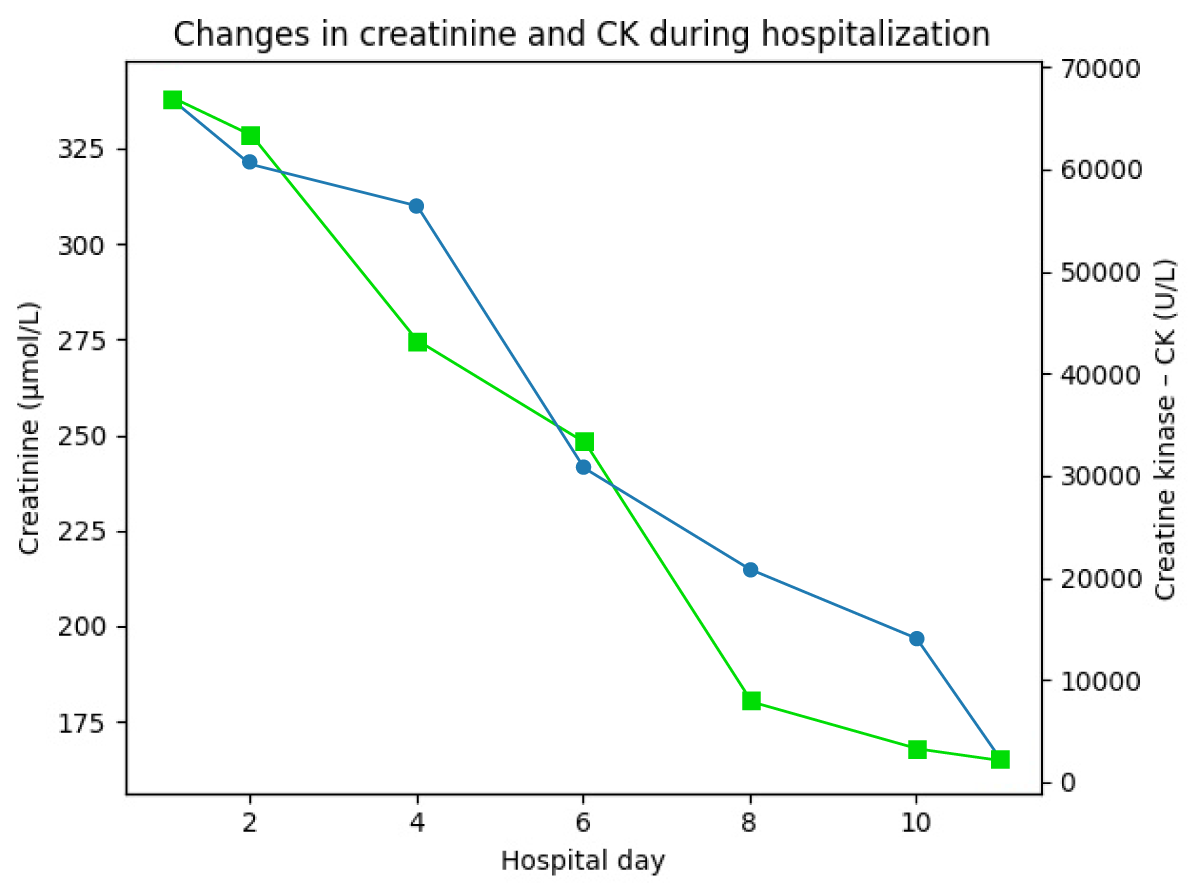 Figure 1: changes in creatinine and creatinine kinase during hospitalisation.
View Figure 1
Figure 1: changes in creatinine and creatinine kinase during hospitalisation.
View Figure 1
Polypharmacy represents a significant challenge, particularly in elderly individuals and patients with chronic illnesses. The use of multiple medications can result in serious adverse effects, including rhabdomyolysis. Although widely accessible tools for identifying drug-drug interactions exist, they are underutilized in everyday clinical practice. Some of available tools include:
1. https://www.drugs.com/drug_interactions.html
2. https://reference.medscape.com/drug-interactionchecker
3. https://go.drugbank.com/drug-interaction-checker
4. https://www.webmd.com/interaction-checker/default.htm
5. https://www.uptodate.com/drug-interactions/?source=navbarDrugInt#di-druglist
The mechanism of action of statins involves inhibition of HMG-CoA reductase, an enzyme crucial for cholesterol biosynthesis in the liver. They are metabolized through cytochrome P450 system, primarily by CYP3A4 (atorvastatin, lovastatin, simvastatin) and CYP2C9 (fluvastatin, rosuvastatin). A well-documented, albeit rare adverse effect is rhabdomyolysis; however, rhabdomyolysis rarely occurs with statin monotherapy. The risk of occurrence is increasing with higher statin doses and advancing age, particularly in those over 65 years, who are four times more likely to require hospitalisation for rhabdomyolysis compared to younger patients. Notably, up to 50% of rhabdomyolysis cases are associated with drug-to-drug interactions [6,7].
Clarithromycin, a macrolide antibiotic, which is metabolized in the liver via cytochrome P450 system and inhibits the CYP3A4 enzyme. Consequently, those results in increased plasma concentrations of statins [8-10]; however, cases of rhabdomyolysis have also been reported with clarithromycin monotherapy [11,12].
Cyclosporine is an immunosuppressant belonging to the calcineurin inhibition class. It is metabolized via the cytochrome P450 system and acts as an inhibitor of CYP3A4 enzyme. Rhabdomyolysis has been reported as an adverse effect of cyclosporine, with the risk further increase when used in combination with statins [3,13-16]. All drugs that inhibit CYP3A4 elevate cyclosporine plasma concentrations and consequently increase the risk of rhabdomyolysis (e.g. ketoconazole, fluconazole, itraconazole, erythromycin, verapamil, diltiazem, allopurinol, corticosteroids).
Ezetimibe is a cholesterol absorption inhibitor. It is metabolized in the small intestine and liver through glucuronidation. Ezetimibe is frequently administered in combination with statins due to their synergistic effect. Both ezetimibe in combination with statin and ezetimibe alone [17] have been reported to cause rhabdomyolysis, although high-quality evidence supporting this is still lacking [18].
In presented case, rhabdomyolysis most likely developed because of drug-to-drug interaction involving cyclosporine, atorvastatin, ezetimibe and clarithromycin - all of which, either individually or in combination, can percipitate rhabdomyolysis. Statins are the most well recognized cause of drug-induced rhabdomyolysis, particularly at high doses and in elderly patients. Temporary discontinuation of atorvastatin during antimicrobial treatment of pneumonia might have prevented the occurrence of rhabdomyolysis.
It is important to emphasize that the patient was hemodynamically stable, without electrolyte disturbances, and exhibited rapid recovery after withdrawal of the offending agents - indicating timely recognition and an appropriate therapeutic response. Early detection od rhabdomyolysis and prompt discontinuation of causative medications are crucial in preventing acute kidney injury and need for dialysis support. The corner stone of treatment includes aggressive hydration and close monitoring of renal functions well as electrolytes, particularly potassium and calcium.
This case highlights the necessity for multidisciplinary approach and continuous physician education regarding the risks of polypharmacy, especially in elderly patients and those with chronic kidney disease [19-21].
Drug-induced rhabdomyolysis, although rare, can have serious consequences, especially in the context of polypharmacy and kidney disease. In this case, interaction among statins, cyclosporine, ezetimibe and clarithromycin led to clinically significant rhabdomyolysis. Caution in drug prescribing, regular therapy reviews, and use of available drug interaction screening tools are essential for preventing such adverse events.
Physician education, particularly in primary care, should focus on raising awareness the risks of combining medications that act via the same enzymatic pathways. Simple measures, such as temporarily discontinuing statin therapy during macrolide antibiotic treatment, can significantly reduce the risk of rhabdomyolysis and its complications.
We declare we don`t have conflict of interest.
Article is not funded.
We hereby declare that this case report has not been published previously and is not under consideration for publication elsewhere.