Background: Cardiorespiratory fitness (CRF), commonly assessed through maximal oxygen uptake (VO2 max), is a robust biomarker of cardiovascular and respiratory efficiency. Increasing evidence highlights its strong association with reduced all-cause mortality, prevention of chronic non-communicable diseases (NCDs), and enhanced longevity. Despite the multifactorial determinants of VO2 max, physical activity represents the main modifiable factor, reinforcing its role as a central indicator for both clinical practice and public health strategies.
Methods: This study is a narrative review of the scientific literature conducted through searches in PubMed, SciELO, Science Direct, and Google Scholar databases. The descriptors "VO2 max," "cardiorespiratory fitness," "longevity," "chronic diseases," "public health," and "mortality risk" wereused in Portuguese and English. Articles published between 2000 and 2024, including systematic reviews, guidelines, consensus papers, and seminal studies, were considered. Publications lacking methodological rigor, duplicates, case reports, and opinion articles were excluded. The included studies were analyzed interpretatively and organized into the maticaxes: physiological basis of VO2 max, its relationship with health and longevity, methods of assessment, and interventions to improve it.
Results: The literature demonstrates that VO2 max is a strong independent predictor of all-cause and cardiovascular mortality. Each 1-MET increment (~3.5 ml/kg/min) in VO2 max is associated with a 13% reduction in overall mortality and a 15% reduction in cardiovascular mortality risk. Higher levels of CRF are linked to lower incidence of NCDs, greater functional capacity during aging, and improved quality of life, regardless of body mass index or other traditional risk factors. VO2 max can be assessed through direct methods (spirometry during graded exercise testing) or indirect field protocols (Cooper, Rockport, or shuttle run tests), which provide feasible alternatives for large-scale assessments. Interventions such as moderate-intensity continuous training and high-intensity interval training consistently improve VO2 max by 15-30% in sedentary individuals. At the population level, promoting CRF has been recognized as a strategic priority for reducing healthcare costs, extending longevity, and enhancing quality of life.
Conclusion: VO2 max is one of the most reliable indicators of population health and longevity, with significant predictive power for mortality and chronic disease risk. Unlike immutable risk factors, VO2 max is highly modifiable through physical activity, making it an essential target for clinical practice, exercise prescription, and public health policies. Incorporating VO2 max assessment into routine health evaluations and promoting strategies to improve CRF may strengthen preventive approaches, support healthy aging, and reduce the global burden of chronic disease.
Cardiorespiratory fitness, VO2 max, Public health, Longevity, Mortality risk
CRF: Cardiorespiratory Fitness; VO2 max: Maximal Oxygen Consumption, NCDs: Non-Communicable Diseases; ACSM: American College of Sports Medicine; WHO: World Health Organization; HIIT: High-Intensity Interval Training; TCIM: Moderate-Intensity Continuous Trainin
Cardiorespiratory fitness (CRF) is defined as the capacity of the cardiovascular, pulmonary, and musculoskeletal systems to take up, transport, and utilize oxygen during progressive and prolonged physical exercise [1]. The primary parameter used to measure CRF is maximal oxygen uptake (VO2 max), which represents the physiological upper limit of the body’saerobic capacity [2]. As a direct measure of the functional efficiency of these systems, VO2 max has been widely studied as a biomarker of overall health and functional capacity across different populations.
Over the past decades, the significant increase in life expectancy combined with the rising prevalence of non-communicable chronic diseases (NCDs), particularly cardiovascular diseases, type 2 diabetes mellitus, and obesity, has highlighted the need for effective strategies for health promotion and disease prevention [3]. Mortality and morbidity associated with these conditions represent one of the greatest challenges to healthcare systems world wide, requiring indicators that allow early risk identification and intervention monitoring [4].
Epidemiological studies consistently demonstrate that VO2 max is a robust and independent predictor of all-cause mortality and specifically cardiovascular mortality [5,6]. Individuals with higher cardiorespiratory fitness exhibit a lower risk of developing and progressing NCDs, as well as improved quality of life and functional capacity throughout aging [7,8]. VO2 max is influenced by multiple factors, including genetics, age, sex, environmental conditions, and, notably, habitual physical activity level [9].
Furthermore, regular physical exercise, particularly aerobic training, is the most effective intervention to improve VO2 max, inducing cardiovascular, respiratory, and muscular adaptations that enhance functional capacity and reduce disease risk [10]. For this reason, VO2 max is frequently used not only as an assessment parameter but also as a target for the prescription and monitoring of exercise programs in both clinical and population settings.
This article presents a narrative review of the scientific literature on the role of VO2 max as a population health indicator and its relationship with longevity. It addresses the physiological foundations of VO2 max, the methodologies employed for its assessment, and the main strategies to enhance it through physical activity. The objective is to provide a critical and up-to-date analysis that contributes to understanding the importance of cardiorespiratory fitness in chronic disease prevention and public health promotion.
This studyis a narrative literature review with a qualitative approach and descriptive nature, aimed at exploring VO2 max as a population health indicator. Articles were searched in the PubMed, SciELO, Science Direct, and Google Scholar databases. The search terms included combinations of “VO2 max,” “cardiorespiratory fitness,” “longevity,” “chronic diseases,” “public health,” and “mortality risk.”
Articles published between 2000 and 2024 in Portuguese, English, and Spanish were included, with emphasison systematic reviews, consensus statements, guidelines, and widely cited classic studies. Only full-text, peer-reviewed publications were selected, while duplicate studies, opinion articles, and those with low methodological quality were excluded.
After applying the inclusion and exclusion criteria, 28 articles were selected for analysis and narrative synthesis. To ensure consistency, studies were manually evaluated considering study design, the matic relevance, and methodological quality. Data analysis was interpretative and organized into the matic axes, defined according to the recurrence and relevance of the findings identified in the literature.
Cardiorespiratory fitness (CRF) is a fundamental component of health-related physical fitness, defined as the integrated capacity of the cardiovascular, pulmonary, and musculoskeletal systems to take up, transport, and utilize oxygen during dynamic physical activities of moderate to high intensity and long duration [1]. CRF is recognized not only as a measure of physical performance butalso as a clinically relevant marker of overall health and life expectancy.
The primary parameter used to quantify cardiorespiratory fitness is maximal oxygen uptake (VO2 max), expressed in milliliters of oxygen per kilogram of body weight per minute (ml/kg/min). VO2 max represents the highest volume of oxygen an individual can consume during maximal or exhaustive exercise and reflects the efficiency of oxygen transport and utilization systems [2]. According to these authors, VO2 max is primarily limited by maximal cardiac output, which is determined by maximal heart rate and stroke volume.
The physiological process to reach VO2 max involves multiple steps: 1) effective pulmonary ventilation to deliver atmospheric oxygen to the alveoli; 2) alveolar-capillary diffusion for blood oxygenation; 3) oxygen transport via systemic circulation mediated by hemoglobin; and 4) extraction and utilization of oxygen by active muscles, mainly in the mitochondria, where oxidative phosphorylation occurs [11]. Alterations in any of these components can limit VO2 max values.
VO2 max magnitude varies widely among individuals. Typical values in sedentary young adults range from 35-45 ml/kg/min for men and 30-40 ml/kg/min for women [1]. In endurance athletes, values can exceed 70 ml/kg/min in menand 60 ml/kg/min in women. Conversely, individuals with chronic conditions such as congestive heart failure, chronic obstructive pulmonary disease (COPD), or severe obesity may present VO2 max values below 20 ml/kg/min [12].
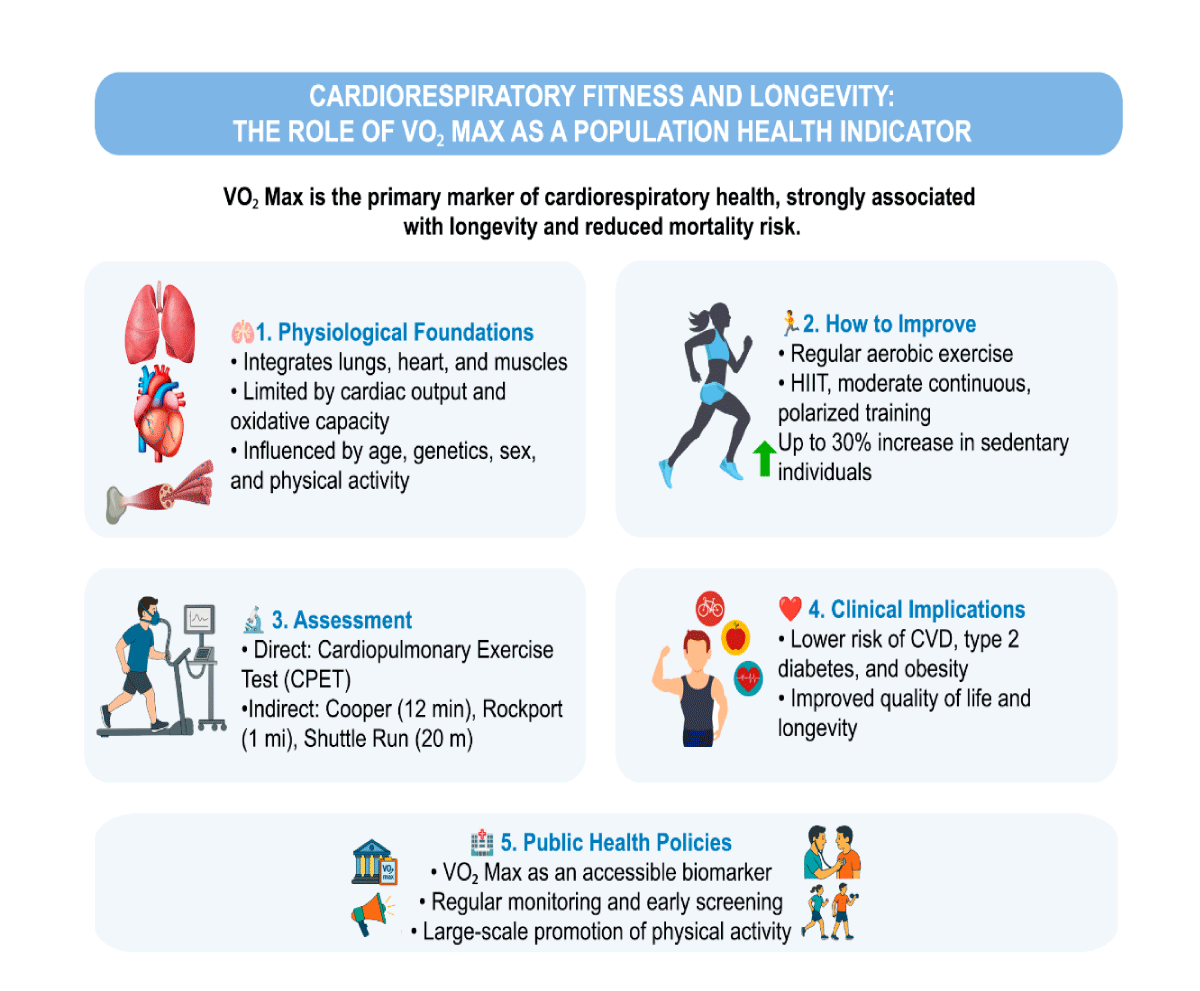 Figure 1: Visual summary of the role of VO2 max in health and longevity.
View Figure 1
Figure 1: Visual summary of the role of VO2 max in health and longevity.
View Figure 1
Several factors influence VO2 max. Age is an important determinant: from 30 years onward, VO2 max declines on average by 1% per year, mainly associated with decreases in maximal heart rate and active muscle mass [13]. Sex is also relevant, as men typically exhibit higher absolute and relative values due to greater muscle mass, larger cardiac volume, and higher hemoglobin concentrations. Additionally, genetic factors account for approximately 25% to 50% of individual variability in VO2 max, according to twin and family studies [14].
Despite the influence of genetics, the main modifiable variable affecting VO2 max is physical activity level. Structured aerobic training programs can increase VO2 max by 15% to 30% in previously sedentary individuals, depending on exercise frequency, intensity, and duration [10]. This improvement results from central adaptations, such as increased stroke volume and left ventricular mass, as well as peripheral adaptations, including greater capillary density and enhanced mitochondrial enzyme activity in trained muscles [15].
Therefore, VO2 max should be understood as a multifactorial physiological variable with direct implications for functionality, physical performance, and clinical prognosis. Its assessment allows not only the estimation of an individual’saerobic capacity but also provides an important indicator of risk for cardiovascular and metabolic diseases, as well as premature mortality.
VO2 max has emerged as one of the most consistent and independent indicators of overall health, with strong predictive capacity for all-cause mortality and, particularly, cardiovascular mortality. Robust longitudinal studies show that individuals with higher cardiorespiratory fitness have a lower incidence of non-communicable chronic diseases (NCDs), greater longevity, and reduced risk of premature death, regardless of factors such as age, sex, smoking status, body mass index (BMI), or presence of comorbidities [5,6].
In one of the largest meta-analyses on the topic, Kodama, et al. [5] analyzed data from over 100,000 individuals and found that each 1 metabolic equivalent (1 MET ≈ 3.5 ml/kg/min) increase in VO2 max was associated with a 13% reduction in all-cause mortality risk and a 15% reduction in cardiovascular mortality risk. These findings reinforce the importance of VO2 max not only as a physical performance parameter but also as a prognostic clinical marker with direct implications for public health.
Furthermore, cardiorespiratory fitness demonstrates superior predictive power compared to other traditional cardiovascular risk markers, such as blood pressure, lipid profile, and central obesity. In the study by [7] Myers, et al. which included over 6,000 men undergoing exercise testing, VO2 max was the strongest isolated predictor of mortality, even among individuals with controlled risk factors.
Another relevant aspect is that VO2 max is sensitive to change and can be significantly modified by behavioral interventions, such as regular physical training. This differentiates it from other genetic or structural factors, making it a valuable indicator for large-scale intervention programs, especially in at-risk populations. As observed by Blair, et al. [8], even overweight or obese individuals with moderate to high cardiorespiratory fitness levels had lower mortality risk compared to normal-weight individuals with low fitness.
Regarding longevity, VO2 max also serves as an important functional indicator in older adults. With advancing age, there is a progressive physiological decline in aerobic capacity, and values below 18 ml/kg/min in elderly individuals are associated with loss of functional independence and higher prevalence of frailty [13]. Maintaining high VO2 max levels in older age is directly related to autonomy, the ability to perform daily activities, and prevention of hospitalizations and clinical events.
The World Health Organization [16] recognizes low cardiorespiratory fitness as a global health risk factor, with an impact comparable to smoking and hypertension. Consequently, several public health guidelines recommend routine assessment of cardiorespiratory fitness in both clinical and population settings as a means of early risk screening and guidance for exercise-based interventions.
Therefore, VO2 max represents more than a measure of athletic performance: it is an accessible, sensitive, and clinically relevant biomarker, playing a central role in health promotion, disease prevention, and the extension of longevity with quality.
Accurate measurement of VO2 max is essential in both clinical and athletic contexts, being used for functional diagnosis, exercise prescription, and intervention monitoring. Methods for assessing maximal oxygen uptake can be classified as direct or indirect, each with advantages and limitations. The choice of method should consider the purpose of the assessment, available resources, and the characteristics of the individual being evaluated.
Direct tests: Direct assessment of VO2 max is performed using spirometry coupled with incremental exercise tests on a treadmill or cycle ergometer, usually until voluntary exhaustion. During the test, expired air is collected and analyzed for O₂ and CO₂ content, allowing calculation of the volume of oxygen consumed per minute. The most commonly used protocols include Bruce, Balke, and Ramp, which follow progressive work load increases [1].
The main advantage of direct testing is its high precision and ability to measure the true point of physiological exhaustion. However, it requires specifice quipment, a controlled environment, and supervision by qualified professionals, and it carries increased risk in individuals with cardiac or respiratory conditions if proper pre-assessment is not performed [17].
Indirect tests: In settings where advanced laboratory resources are unavailable, indirect tests are viable alternatives, showing good validity when applied correctly. These tests use variables such as heart rate, time, distance covered, or the number of completed stages to estimate VO2 max based on predictive equations.
Commonly used in direct tests include:
• Cooper Test (12 minutes): Estimates VO2 max based on distance covered during a continuous 12-minute run. Initially developed for military personnel, it has been adapted for the general population [18].
• Rockport Test (1 mile): Involves walking one mile as quickly as possible, measuring time and heart rate at completion, suitable for beginners or older adults [19].
• Shuttle Run Test (20 m): Also known as the Léger Test, involves back-and-forth runs with progressively increasing speed, commonly used in schools and field assessments [20].
Although indirect tests do not achieve the same precision as direct methods, they correlate well with true VO2 max and are valuable for large-scale assessments, particularly in public health programs, schools, gyms, and resource-limited environments.
Method selection should consider not only the desired accuracy but also the target population. Highly trained athletes benefit more from direct testing, whereas older adults, beginners, or cardiac rehabilitation patients may be better served with submaximal or field-based tests. Additionally, factors such as motivation, test familiarity, ambient temperature, hydration, and medication use can influence results [21].
A crucial complement to VO2 max measurement is the anaerobic threshold. While VO2 max represents maximal aerobic capacity, the anaerobic threshold indicates the highest exercise intensity that can be sustained for extended periods and is often more closely related to functional performance in prolonged activities [22].
Therefore, VO2 max assessment, whether direct or indirect, should be contextualized based on individual characteristics and the purpose of the evaluation, serving as an indispensable tool for functional diagnosis, exercise prescription, and population health monitoring.
VO2 maxis a physiological indicator sensitive to behavioral changes, particularly those related to physical activity levels. Unlike other cardiovascular risk factors, such as age or genetic inheritance, cardiorespiratory fitness can be significantly improved through structured exercise interventions, making it a priority target in health promotion policies.
The most effective strategy to increase VO2 max is regular aerobic exercise, which induces central and peripheral physiological adaptations. Central adaptations include increased stroke volume, left ventricular compliance, and pulmonary capillarization, resulting in higher cardiac output [15]. Peripheral adaptation so ccur at the muscular level, with increased mitochondrial density, local capillarization, and oxidative enzyme activity, enhancing oxygen extraction and utilization efficiency [11].
Key exercise methods for improving aerobic capacity include:
• Moderate-Intensity Continuous Training (MICT): Involves sustained exercises such as walking, running, cycling, or swimming at 60-80% of maximal heart rate. It is safe, progressive, and ideal for beginners and clinical populations [10].
• High-Intensity Interval Training (HIIT): Alternates short periodsof intense effort (85-95% HRmax) with active recovery intervals. Studies demonstrate that HIIT can produce VO2 max gains equal to or greater than MICT in less total training time [23].
• Polarized Training: Combines low-intensity sessions with a smaller volume of high-intensity sessions. This approach has proven effective in endurance athletes, promoting substantial gains without excessive overload [24].
The most appropriate training type depends on the individual’s profile, objectives, clinical conditions, andinitial fitness level. However, evidence shows that even modest improvements in VO2 max through structured exercise provide significant health benefits, including reduced blood pressure, improved glycemic and lipid profiles, and systemicanti-inflammatory effects [25].
Enhancing cardiorespiratory fitness has been proposed as a population-level goal in international guidelines. The World Health Organization [3,16] recommends atleast 150-300 minutes per week of moderate-intensity aerobic activity, or 75-150 minutes of vigorous activity, for adults. Adherence to these guidelines is associated with measurable improvements in VO2 max and reductions in premature mortality.
In countries with public policies promoting physical activity, such as Canada, Norway, and Finland, higher life expectancy, lower obesity prevalence, and better control of non-communicable chronic diseases have been observed [26]. These findings support the argument that population-based programs promoting physical activity not only reduce public healthcare costs but also enhance quality of life and healthy aging.
Despite clear evidence, structural and behavioral barriers remain that prevent populations from improving cardiorespiratory fitness. Key obstacles include sedentary lifestyles associated with urban living, lack of access to safe exercise environments, limited awareness of exercise benefits, and absence of professional supervision.
Community programs with guided supervision, partnerships between healthcare units andsports centers, and educational campaigns can help overcome these challenges. Additionally, including VO2 max assessment (or CRF estimates) in preventive clinical protocols, such as routine check-ups, has been recommended by experts as a mean so fearly identification of at-risk individuals [27,28].
The present study highlights that VO2 max is one of the most robust markers of population health, capable of accurately predicting all-cause mortality and the incidence of non-communicable chronic diseases. As a measure of cardiorespiratory fitness, it provides a functional estimate of aerobic capacity and clinical risk associated with physical inactivity.
Beyond being an objective and intervention-sensitive metric, VO2 max has both clinical and population-level applicability, guiding public health policies, exercise programs, and preventive strategies. Its inclusion in functional assessment protocols can strengthen initiatives for health promotion and healthy aging.
Future research is recommended to explore its application in specific populations and investigate accessible methods for assessment and monitoring. Recognizing VO2 max as a clinical and functional indicator represents an investment in years of life with quality, autonomy, and reduced burden on healthcare systems.
No funding was received for this work.
The author is solely responsible for all stages of the study, including conception, data collection and analysis, and manuscript writing.