
Background: Out-of-hours (OOH) CT and MRI examinations at our institution are provisionally reported by on-call radiology residents and used to guide overnight patient management. We aimed to (1) quantify the overnight discrepancy rate between provisional resident reports and subsequent consultant reports, and (2) explore associations between discrepancies and resident grade, study type, and reporting time.
Methods: This registered service evaluation retrospectively reviewed all consecutive CT and MRI examinations provisionally reported overnight by radiology residents between 13 June 2022 and 3 July 2022. Provisional reports were compared with the final consultant reports. Discrepancies were categorised as minor, significant, or major using predefined criteria by an ST4 radiology resident.
Results: In total, 993 imaging examinations were included. The overall discrepancy rate (DR) was 14.5% (144/993). Major and significant discrepancies comprised 56/993 scans (5.6%) and were considered potentially management‑altering. Variation in DR by one‑hour time block was not statistically significant (χ2 test, p = 0.37).
Conclusion: The overall discrepancy rate for overnight resident provisional reporting was 14.5%, with 5.6% of examinations containing potentially management-altering discrepancies. Discrepancies appeared to cluster during busier periods, suggesting that workload and interruptions may contribute more than fatigue alone. Targeted interventions focused on high-activity periods may help reduce clinically significant discrepancies.
Clinical relevance statement: Quantifying and characterising overnight reporting discrepancies can identify modifiable factors-such as workload and interruptions-that may improve reporting accuracy and patient safety in OOH settings.
There are no nationally agreed UK benchmarks for acceptable overnight radiology resident discrepancy rates.
In this service evaluation, the overall discrepancy rate was 14.5%, with a management-altering discrepancy rate of 5.6%.
Discrepancy rates varied by specialty category; vascular imaging examinations had the lowest discrepancy rate. No statistically significant association was observed with time of shift or training grade.
DR: Discrepancy Rate; CT: Computed Tomography; OOH: out-of-hours; REALM: Radiology Events and Learning Meetings
• Radiology
• Quality Improvement
• Medical Education
Discrepancy rate, Radiology residents, Out-of-hours reporting, Diagnostic error, Workload, Patient safety, CT, MRI
Provisional radiology reports play a critical role in guiding the management of acutely unwell patients overnight in hospitals where on-site radiology residents provide acute out-of-hours (OOH) imaging cover. As such, accurate and timely reporting is essential. In this context, a reporting discrepancy is defined as a difference between the provisional report issued by a radiology resident and the final report provided by the reviewing consultant radiologist. These discrepancies may range from minor variations with no impact on patient care to significant or major discrepancies that can alter clinical management or delay time-critical interventions. Consequently, the potential impact of reporting discrepancies on patient outcomes and service delivery is substantial.
In this evaluation, “discrepancy” refers to a consultant‑perceived discrepancy: any difference identified by the duty consultant radiologist during next‑day review of the on‑call registrar’s provisional overnight report.
At present, there are no defined Royal College, national, or regional standards for acceptable radiology discrepancy rates (DRs). However, an estimated day-to-day reporting error rate of approximately 3-5% has been suggested. Published studies report DRs between radiology residents’ provisional CT reports and final consultant reports ranging from 2.0% to 15.1% [1-5]. In the OOH setting, DRs have been reported to be as high as 30% [1]. While some degree of discrepancy in radiological reporting is inevitable, these can be reduced through appropriate training, supervision, and structured quality assurance processes [6]. Importantly, reporting discrepancies may contribute to increased healthcare costs, patient anxiety, and potential patient harm as a result of delayed or inappropriate clinical management [6,7].
Compared with prior work, this service evaluation focuses on overnight reporting and examines DRs by resident grade, study type, and reporting time, to identify areas where targeted interventions may improve diagnostic accuracy in OOH settings.
The aims of this study were: 1) to determine the DR for overnight on-call reporting at NUH and; 2) to evaluate the relationship between DR and factors such as resident seniority, type of scan and what time the scan was reported during the night shift.
This retrospective study was registered as a service evaluation with the hospital’s service evaluation department. All consecutive emergency on-call CT and MRI examinations performed at a university teaching hospital and level 1 major trauma centre with over 1,300 beds between 13 June and 3 July 2022 were reviewed. OOH imaging examinations were provisionally reported by on-call radiology residents and subsequently reviewed by a consultant radiologist the following morning.
The exclusion criteria were as follows: 1) CT/ MRI reported overnight by a consultant in the first instance; 2) CT/MRI examinations reported independently overnight by a senior on-call resident without subsequent consultant review.
Data were collected retrospectively from the local radiology information system (RIS), picture archiving and communication system (PACS), and electronic patient records, comprising all out-of-hours overnight reports made by on-call radiology residents. Data was collected by an ST4 radiology resident, a foundation programme doctor and two medical students.
All acute CT and MRI scans provisionally reported overnight were reviewed by a consultant radiologist the following morning. Consultant amendments ranged from minor re-wording to identification of additional findings. Management-altering addenda were communicated to the treating clinical teams using the Trust’s imaging alert process in accordance with local policy.
Discrepancy rate (DR) was calculated as the number of examinations with any consultant-identified discrepancy divided by the total number of examinations reviewed (n = 993). For stratified analyses (time block, study type, and resident grade), DRs were calculated within each stratum using the number of examinations in that stratum as the denominator.
a) Minor-noteworthy findings that would not alter acute management.
b) Significant-findings that could have influenced acute management but were unlikely to result in lasting harm.
c) Major-missed critical findings that would change the course of management and may impact the patient’s long-term outcome.
Discrepancy classification was undertaken by a ST4 radiology resident using the aforementioned predefined criteria.
DRs were also organised into 1-hour blocks. The decision to organise the data into 1-hour blocks was made to allow a granular assessment of how DR fluctuates throughout the OOH shift and to identify potential temporal trends, such as peaks associated with workload or fatigue.
Data was collected and analysed using Microsoft Excel. DR were calculated and analysed for each seniority of resident, each shift segment (split into thirds) and each study type. The Chi Squared test was utilised to determine significance.
A total of 993 imaging examinations were reviewed, with 144 consultant‑perceived discrepancies identified (overall DR 14.5%).
After reviewing 997 examinations, a total of 993 examinations were included. Four examinations were excluded for the following reasons: Two were reported by a consultant, and two final reports were released by a post-CCT ST5 resident. The included examinations comprised of acute CT and MRI scans. The examinations were organised into the following subspecialist types to reflect the various radiology specialist interests:
• Musculoskeletal (MSK) radiology: MRI spine, Trauma CT, and preoperative surgical planning CTs.
• Neuroradiology: CT Head and CT Intracranial Angiograms.
• Body radiology: CT Chest/Abdomen/Pelvis, CT Pulmonary Angiograms, and CT Kidneys, Ureter, Bladder.
• Vascular radiology: CT Aorta, Mesenteric Angiograms, and Peripheral Angiograms.
The overall DR was found to be 14.5% (n = 144), consisting of 1.8% major discrepancies, 3.8% significant discrepancies and 8.9% minor discrepancies. The management-altering DR (major and significant combined) was 5.6%. The mean number of discrepancies per overnight shift was 6.9 (144 discrepancies across 21 shifts) (Table 1).
Table 1: Summary of DRs. View Table 1
DR Vs. Time: DRs were analysed in one‑hour blocks (Table 2). The relationship between reporting volume and the number of discrepancies identified across the overnight period is illustrated in Figure 1. Reporting volume and DR varied across the shift; however, differences between time blocks were not statistically significant (χ² test, p = 0.37) (Figure 1).
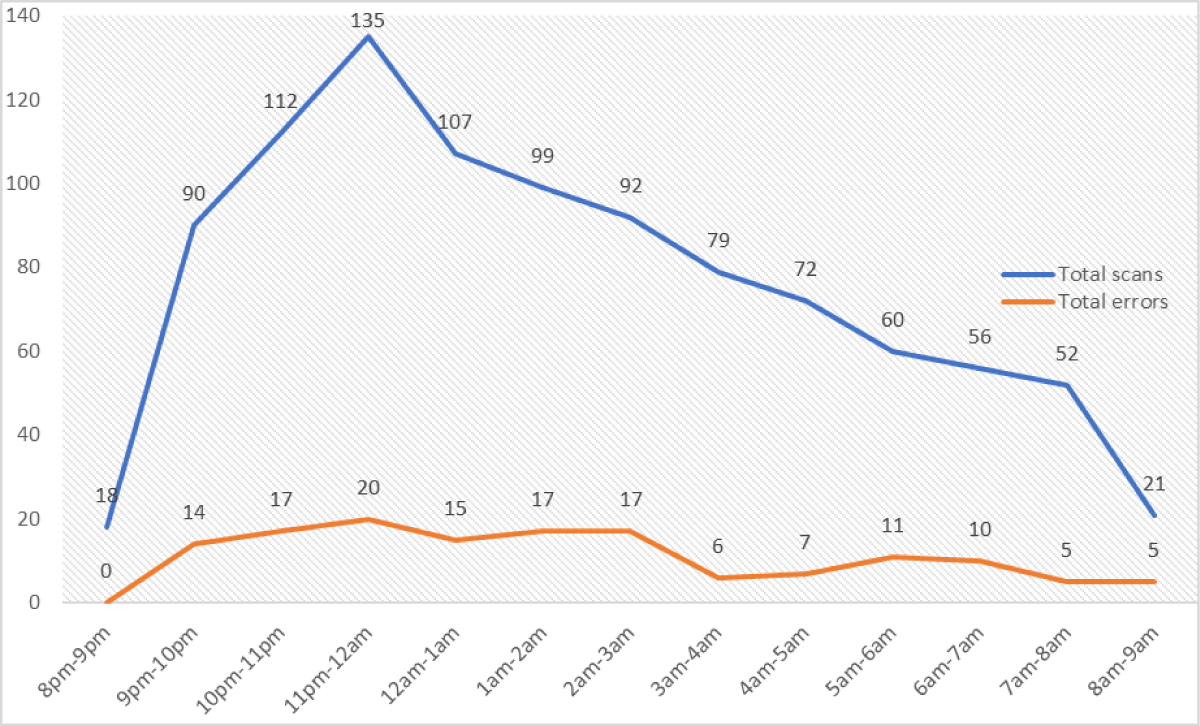 Figure 1: DR vs. total number of scans overnight (by hour).
View Figure 1
Figure 1: DR vs. total number of scans overnight (by hour).
View Figure 1
Table 2: DRs organised into one-hour blocks. View Table 2
DR Vs. Study Type: Specialty category: Body radiology demonstrated the highest within‑specialty discrepancy rate (60/278; 21.6%), followed by musculoskeletal radiology (20/116; 17.2%), neuroradiology (59/506; 11.7%) and vascular radiology (5/93; 5.4%). Although neuroradiology had a lower within‑specialty DR than Body, it accounted for a large absolute discrepancy burden due to volume (59/144; 41.0%), similar to Body (60/144; 41.7%). Differences in overall DR across specialties were statistically significant (χ² test, p < 0.001) (Figure 2).
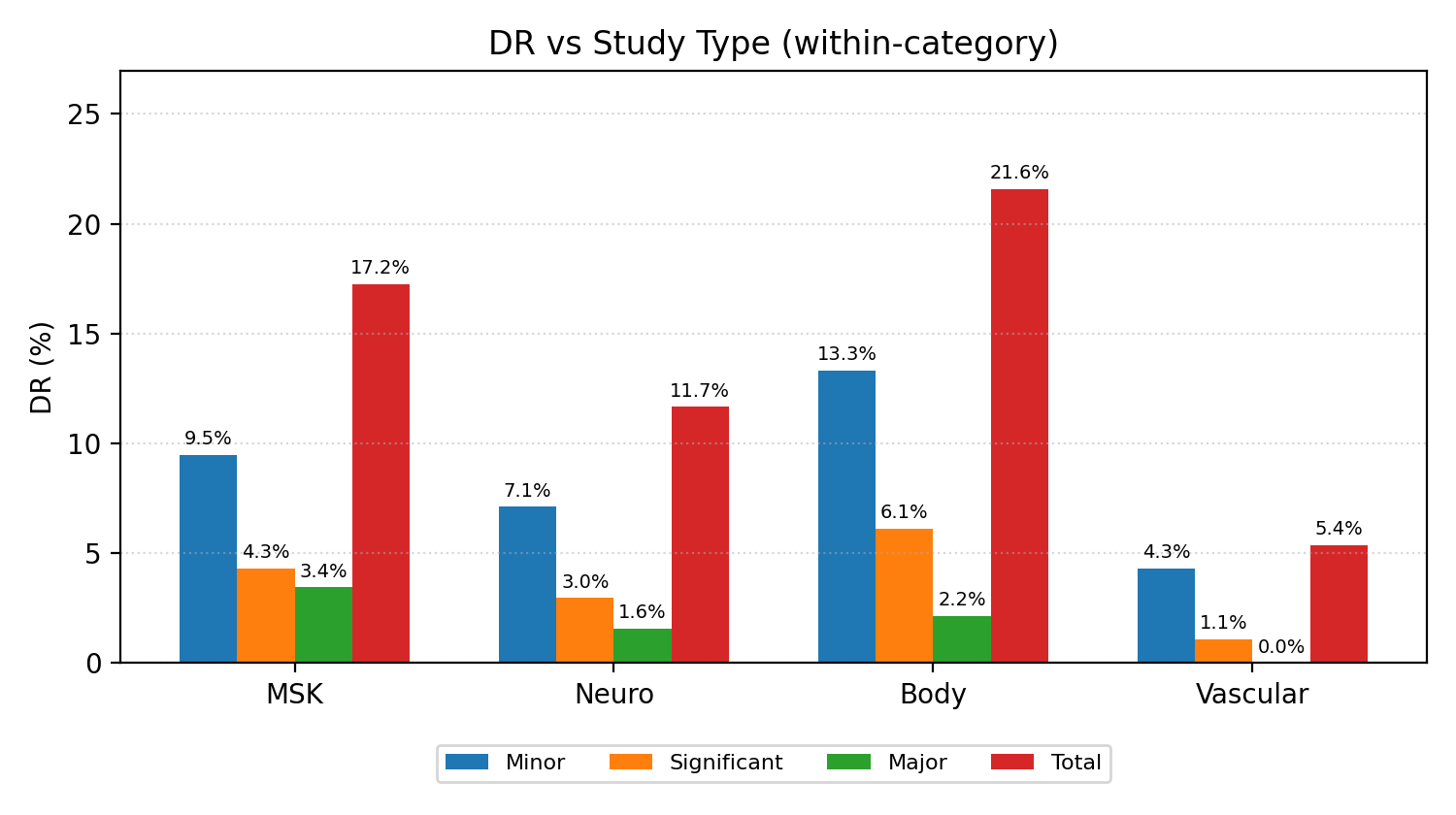 Figure 2: DR vs. study type (Within-category).
View Figure 2
Figure 2: DR vs. study type (Within-category).
View Figure 2
Within each category, total DRs were highest for musculoskeletal (17.2%) and body examinations (21.6%) and lowest for vascular examinations (5.4%) (Table 3). Neuro examinations accounted for just over half of the overnight workload and contributed the largest absolute number of discrepancies, including most major discrepancies. No major discrepancies were recorded in vascular examinations during the study period.
Table 3: DRs for each body part. View Table 3
DR Vs. resident seniority
Eleven residents reported scans over the 21 overnight shifts analysed: ST2 (n = 4), ST3 (n = 2), ST4 (n = 2), and ST5 (n = 3). Across the study period, ST5 residents issued the largest volume of provisional reports (430/993, 43.3%).
When DRs were calculated within each training grade, the total DR ranged from 12.7% (ST2) to 17.9% (ST3) and 17.2% (ST4), with ST5 at 14.4% (Table 4). Major discrepancies accounted for 1.2% of ST2 reports, 1.1% of ST3 reports, 4.1% of ST4 reports, and 1.9% of ST5 reports.
Given the limited sample size within each grade and the likelihood of case-mix differences, these comparisons should be interpreted cautiously. However, the combination of higher reporting volume and sustained DRs supports further exploration of workload, interruptions, and case complexity as contributors to overnight discrepancies.
Two-year outcomes follow-up:
A two-year outcomes follow-up was carried out by reviewing follow-up imaging and the clinical notes for the discrepant cases identified from this service evaluation. The review did not identify documented patient harm, including those cases that were deemed to have a major discrepancy within the provisional report. For all these cases, the consultant review the following morning ensured timely correction and appropriate patient management as necessary.
In this three-week service evaluation of 993 overnight imaging examinations, the overall consultant-perceived discrepancy rate between registrar provisional reports and consultant final reports was 14.5% (144/993). Major and significant discrepancies comprised 56/993 examinations (5.6%) and were considered potentially management-altering. Discrepancy counts tracked reporting volume; however, discrepancy rates did not differ significantly across one-hour time blocks (χ² test, p = 0.37) or by training grade (χ² test, p = 0.48).
Analysing discrepancy rates within a department is essential for evaluating reporting performance, identifying training needs, and mitigating risk. This is particularly relevant in high-volume emergency and trauma settings, where overnight CT reporting supports time‑critical decision-making and rapid triage.
While adhering to national guidelines or established standards for DRs is crucial, there is currently an absence of a universally agreed-upon standard across the UK. The literature reveals a range of published DRs from 2.0-15.1% [1-5], which contextualises the variability observed in reporting discrepancies. These disparities highlight the multifactorial nature of reporting accuracy, influenced by factors such as radiologist experience, case complexity, workload, and distractions.
The overall discrepancy rate observed lies within published ranges for overnight provisional reporting [1-5,8]. Importantly, the potentially management-altering discrepancy rate of 5.6% indicates that a small but meaningful subset of cases may influence downstream clinical management, reinforcing the value of structured feedback, timely consultant review, and learning from discrepant cases.
Neuroradiological imaging examinations constituted the largest proportion of the overnight workload (506/993). Although the within-category DR for neuro examinations (11.7%) was lower than that observed for body (21.6%) and musculoskeletal examinations (17.2%), the high volume of head CT examinations meant that neuro imaging contributed the greatest absolute number of discrepancies, including most major discrepancies (8/18, 44.4%). Major discrepancies most commonly related to missed intracranial haemorrhage, consistent with prior studies demonstrating higher discrepancy rates in emergency head CT interpretation by residents compared with consultant radiologists [9-11]. This reinforces the importance of structured training, supervision, and feedback for common high-volume emergency imaging studies such as CT head.
Overall, 5.6% of the 993 cases reviewed in this service evaluation may have resulted in altered inpatient management had scans been reported initially by a consultant; however, only 1.8% were associated with a perceived major discrepancy with the potential to delay or alter overnight management. Reassuringly, two-year follow-up of discrepant cases identified no documented patient harm, likely reflecting timely consultant review and effective escalation pathways. Nonetheless, reducing management-altering discrepancies remains an important patient-safety priority.
Discrepancy rates varied modestly by training grade (ST2 12.7%, ST3 17.9%, ST4 17.2%, ST5 14.4%); however, this association was not statistically significant (χ² test, p = 0.48). ST5 registrars contributed the greatest share of discrepancies (62/144; 43.1%) reflecting the largest share of overnight reporting volume (430/993; 43.3%).
Several factors may plausibly contribute to the modest variation observed by training grade. More senior registrars may undertake a higher proportion of complex examinations and may be more likely to issue definitive provisional overnight reports rather than defer interpretation, increasing the opportunity for discrepancies to be identified at next-day consultant review. Conversely, some mid-training registrars may be at a stage of training in which general radiology knowledge and pattern recognition are particularly well consolidated through structured examination preparation and recent assessment. Future work should adjust for case mix (including modality and clinical complexity) to better characterise any relationship between seniority, workload, and discrepancy severity.
Although discrepancy rates differed numerically across time blocks, these differences were not statistically significant (χ² test, p = 0.37), and there was no consistent late-shift increase suggestive of fatigue alone.
This contrasts with studies reporting increased error rates following prolonged consecutive overnight working hours, suggesting that workload and interruptions may be more influential than time-on-task alone in this setting [12].
The descriptive peak in discrepancies during the middle of the night likely reflects the busiest period of emergency and inpatient demand, when on-call registrars balance reporting with protocoling, urgent clinical communication and coordination tasks.
In addition to time-of-shift, workload and case mix appear to drive discrepancy burden. For example, ST5 registrars contributed the largest absolute number of discrepancies (62/144; 43.1%), reflecting their higher reporting volume, whereas within-grade discrepancy rates did not show a simple linear relationship with seniority.
Visual strain and fatigue can impair radiologist performance and are recognised contributors to error in demanding reporting environments [13-16]. While this evaluation did not demonstrate a consistent late-shift effect, practical measures such as optimising workstation ergonomics, promoting hydration and brief screen breaks, and minimising avoidable interruptions may still help support accuracy during overnight work.
Where operationally feasible, embedding short micro-breaks and protected reporting time into overnight rotas may reduce cognitive load and support sustained performance without compromising patient flow.
Firstly, discrepancies were identified during routine next-day duty review and were not adjudicated through a formal discrepancy panel. As such, the findings represent consultant‑perceived discrepancies and may be influenced by inter‑observer variation. Secondly, classification into minor, significant, and major categories relies on clinical judgement and may differ across institutions, which limits direct comparability with other studies.
As previously discussed, although more senior residents demonstrated higher DRs, this study did not assess the complexity of reported cases or determine whether more junior residents selectively reported less complex examinations, potentially introducing selection bias. Nevertheless, it is reasonable to infer that the higher DRs observed among the most senior residents are at least partly attributable to their increased reporting workload.
Finally, this study analysed scans reported over a three-week period in 2022 and included only 11 residents, representing a subset of the 41 residents participating in the on-call rota. As such, the findings may not be fully representative of the entire resident cohort, and caution should be exercised when generalising these results.
This service evaluation of 993 overnight imaging examinations found an overall consultant‑perceived discrepancy rate of 14.5% (144/993). Major and significant discrepancies comprised 56/993 examinations (5.6%) and were considered potentially management‑altering; major discrepancies accounted for 18/993 examinations (1.8%).
Discrepancy rates differed by specialty category: body radiology had the highest within‑specialty discrepancy rate (21.6%), whereas neuroradiology contributed the largest share of discrepancies because it accounted for over half of the overnight workload. Vascular examinations had the lowest discrepancy rate (5.4%).
Differences by training grade were modest and not statistically significant (p = 0.48). Discrepancy rates also did not differ significantly across one‑hour time blocks (p = 0.37), suggesting that workload and interruptions, rather than seniority or time‑of‑shift alone, drive discrepancy burden.
Quality improvement efforts should therefore prioritise system‑level safeguards, including timely consultant review, targeted subspecialty support for higher‑risk specialties, structured feedback and learning from discrepant cases, and measures to reduce avoidable interruptions during overnight reporting. Ongoing monitoring through local governance processes, such as Radiology Events and Learning Meetings (REALMs), supports structured learning from discrepancies and service improvement [17,18].
This project was registered with the Trust service evaluation/service evaluation department. As a service evaluation using anonymised retrospective data, formal research ethics committee approval and individual patient consent were not required in accordance with local policy.
The data that support the findings of this study are available from the corresponding author on reasonable request, subject to institutional approvals and data governance requirements.
The authors declare no competing interests.
We thank the consultant radiologists and radiology residents involved in the overnight on-call service and report review process.