
Background: Traditional auscultation remains diagnostically valuable but is limited by examiner subjectivity and access. Smartphone-based AI phonoscopy offers an opportunity for scalable self-screening for valvular heart disease.
Methods: Stethophone®, an AI-enabled software as a medical device, was made available for download in Canada, the United States, and Ukraine. Users recorded heart sounds through the smartphone's built-in microphones, processed and enhanced in real time using patented audio algorithms. Quality was automatically assessed, and users were prompted to re-record as needed. Recordings were analyzed for murmurs and aortic stenosis signatures using AI phonoscopy.
Results: Among 28,188 users producing 109,882 recordings, 91.7% of lay users and 89.0% of healthcare professionals achieved a clinically interpretable recording on the first attempt. Lay-users and healthcare professionals performed similarly (91% vs 89%). The most successful auscultation site was the tricuspid point; the left carotid least. Cardiac murmurs were detected in 16.3% of recordings, corresponding to 15.6% of users. Structural murmurs were identified in 7.0% of users (4.9% of recordings). Murmurs consistent with aortic stenosis were present in 6.3% of users.
Conclusion: This study demonstrates that self-auscultation with a smartphone and dedicated medical software is highly feasible in lay populations, with quality results comparable to clinicians. Pathological murmurs, notably those of aortic stenosis, are common and highlight the potential for population-wide early detection of cardiac disorders.
Artificial intelligence, Self-auscultation, Valvular heart disease, Aortic stenosis, Digital health
AI: Artificial Intelligence; AS: Aortic Stenosis; CI: Confidence Interval; PPV: Positive Predictive Value; S1: First Heart Sound; S2: Second Heart Sound; TTE: Transthoracic Echocardiography; VHD: Valvular Heart Disease
Structural heart disease remains a leading global health issue. Valvular heart disease (VHD) is a major contributor to morbidity and mortality. Moderate to severe VHD affects approximately 2.5% of the general population, increasing to 13.3% in individuals over 75 years [1]. While advanced imaging is available in clinical settings, early signs such as murmurs and arrhythmias often go undetected due to a limitation or access to screening tools. Traditional auscultation, though diagnostically rich, has declined in use given its reliance on examiner skill and in-person visits [2]. The accuracy of traditional auscultation is variable and often suboptimal. In a subcohort of the OxValve population study, 251 patients without a prior VHD diagnosis underwent cardiac auscultation by two general practitioners, with findings compared to transthoracic echocardiography (TTE) in an investigator-blinded evaluation. Auscultation demonstrated a sensitivity of only 32% and specificity of 67% for detecting mild VHD, improving to 43% and 69% for significant VHD, respectively [3].
Recent advances in AI phonoscopy and smartphone technology enable high-fidelity cardiac sound capture outside of clinics, potentially transforming early detection. Nevertheless, the question remains whether smartphone-based self-auscultation is practically feasible in real-world conditions, when recordings are performed by large groups of users without clinical supervision. This study set out to test whether self-auscultation with a smartphone and AI phonoscopy can truly work at a population scale. We examined 109,882 recordings collected from users in three countries to evaluate recording quality, first-attempt success, and the practical performance of self-directed auscultation in everyday, non-clinical environments.
This study was designed as a real-world feasibility evaluation of smartphone-based self-auscultation supported by AI-enabled phonoscopy in a large unsupervised population. Stethophone ® [4] was introduced to the general population in Canada, the United States, and Ukraine through social media-based outreach, primarily viewed by adults over 30 years of age (Figure 1). Approximately 40% of outreach depicted healthy individuals encouraged to self-screen for cardiac anomalies. Another 40% segment depicted older concerned people with nonspecific symptoms (e.g., dyspnea, chest discomfort), seeking information to share with their doctors to receive faster care. The remaining 20% were directed at healthcare professionals offering information about VHD screening and introducing the Stethophone ® product as a clinically practical, medically cleared, Class II screening device. Use of the application was voluntary, and no incentives, clinical referrals, or follow-up were provided.
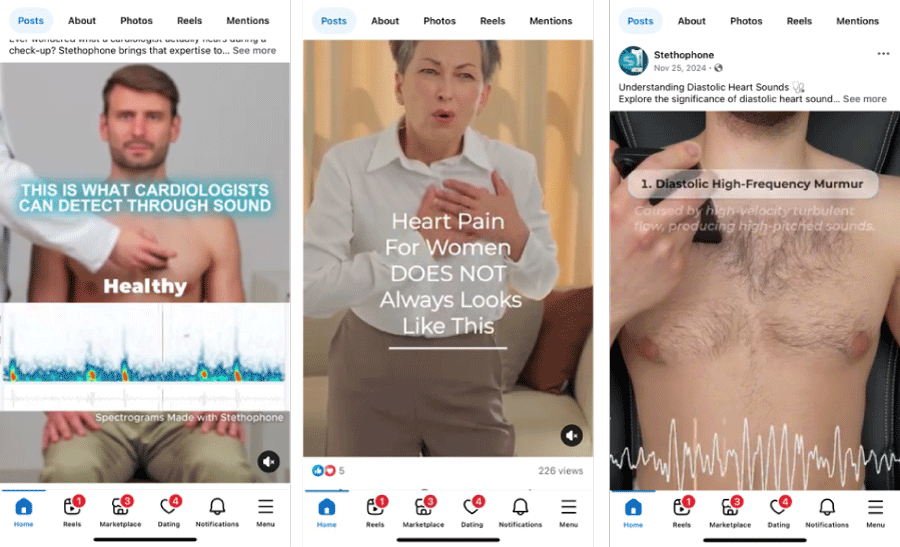 Figure 1: Screenshots of social media materials presenting the Stethophone® application.
View Figure 1
Figure 1: Screenshots of social media materials presenting the Stethophone® application.
View Figure 1
Stethophone ® was developed by Sparrow Bioacoustics Inc. (Newfoundland and Labrador, Canada) as an AI-enabled software medical device. The system incorporates proprietary AI and bioacoustic enhancement to improve cardiac signal audibility, together with clinical analysis and visualizations to support interpretation. The AI algorithms were developed and trained by Sparrow Bioacoustics on proprietary datasets of chest sound recordings collected at standard auscultation sites. These training datasets cover a broad spectrum of valvular disease presentations but are not publicly available. In line with this implementation context, the study did not aim to assess clinical outcomes, establish disease prevalence, or evaluate diagnostic accuracy, but rather to characterize feasibility and operational performance of self-directed auscultation in a real-world population.
Users downloaded the Stethophone ® software and created accounts, where they self-identified as healthcare workers or lay individuals. After account creation, a short in-app, self-guided tutorial on chest-recording best practices was provided, including guidance on device placement, recognition of clear audio signals, background noise, and software operation. Recordings were then performed by placing the smartphone on the chest, allowing the built-in microphones to capture 20-second chest sounds at standard auscultation sites (Figure 2). All recordings were initiated, repeated, and completed independently, without external assistance, and were performed in non-clinical environments under uncontrolled ambient conditions.
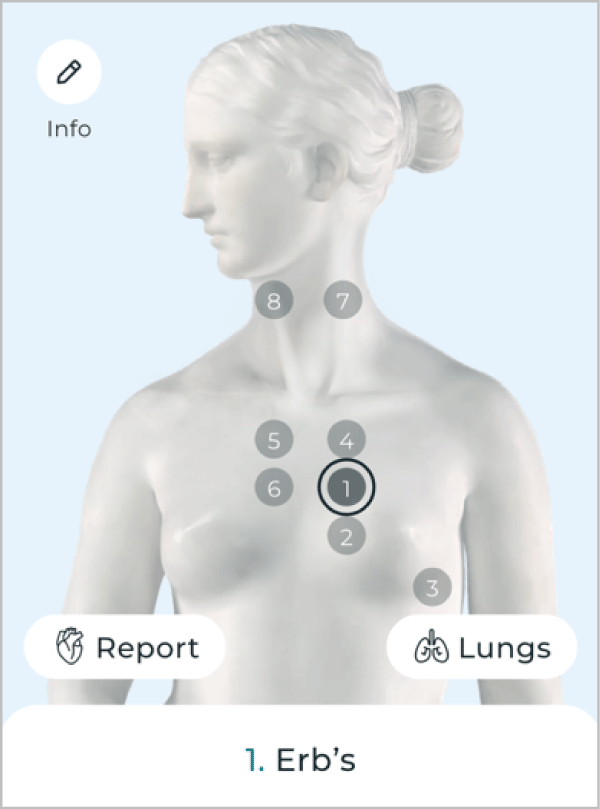 Figure 2: Locations of recording points used in the current research.
View Figure 2
Figure 2: Locations of recording points used in the current research.
View Figure 2
Raw audio signals were enhanced and filtered using Stethophone’s patented audio algorithms to improve signal audibility. An automated quality assessment algorithm evaluated the presence of detectable S1 and S2 heart sounds and evaluated signal integrity relative to background noise. Recordings that did not meet predefined quality thresholds automatically prompted immediate re-recording within the same session.
Detection of cardiac murmurs was performed using AI phonoscopy. The AI system was used exclusively for automated signal enhancement, quality assessment, and algorithmic classification of recorded cardiac sounds. Algorithmic outputs were generated according to predefined categories, including:
presence or absence of a cardiac murmur,
classification of detected murmurs as innocent or structural,
identification of murmurs consistent with aortic stenosis.
All algorithms operated at a pre-specified decision threshold established during prior validation on independent datasets and were not modified, retrained, or adapted using data collected in this study. Outputs were generated automatically and were not adjudicated by clinicians within the context of this study.
Primary and secondary outcomes were defined a priori and included:
successful first-attempt recordings vs multiple attempts or failed attempts
detection of the presence of a cardiac murmur
classification of a found murmur as either innocent or structural
further classification of the murmur as being consistent with aortic stenosis
The primary outcome of interest was feasibility, operationalized as the proportion of recordings achieving clinically interpretable quality on the first attempt. Secondary outcomes were descriptive and intended to characterize recording performance and signal quality rather than to establish diagnostic accuracy or population prevalence. Outcomes related to recording quality were evaluated at the recording level, whereas outcomes related to murmur detection and classification were evaluated at the participant level, with each participant counted once if at least one positive recording was identified. This participant-level analytical approach was selected to reflect the intended individual-level use of self-auscultation and to avoid artificial inflation of detection rates resulting from repeated recordings by the same user.
Categorical variables are reported as counts and percentages. For key proportions, 95% confidence intervals were calculated using the Wilson score method for binomial proportions. Comparisons between groups, including lay users versus healthcare professionals and differences across auscultation sites, were performed using standard statistical tests for proportions, with exact p-values reported where applicable. All statistical tests were two-sided, with a significance threshold of α = 0.05. Given the exploratory and feasibility-focused nature of the study, statistical analyses were primarily descriptive and were not intended to test predefined diagnostic hypotheses. Positive predictive value and recall, reported for murmur detection and murmurs consistent with aortic stenosis, refer to a pre-specified operating point validated on a separate dataset with echocardiographic confirmation. Diagnostic performance metrics were not re-estimated in this unsupervised population study, as confirmatory imaging data were not available. These performance estimates are provided for contextual reference only and should not be interpreted as measures of diagnostic accuracy within the present population.
Recordings that did not meet automated quality thresholds, such as absence of detectable S1 or S2 heart sounds or excessive noise, were treated as failed attempts. Analyses were conducted using all available data. This study employed a convenience sampling approach that included all eligible users during the study period. No a priori sample size or power calculation was performed, as the study was designed to capture real-world operational performance across a broad range of users, devices, and recording conditions rather than to achieve a predetermined statistical power.
A total of 28,188 users generated 109,882 cardiac sound recordings during the study period. Recording success on the first and second attempts differed slightly between user groups. Among lay users, 91.7% achieved a high-quality recording on the first attempt and 91.1% on the second attempt, while among healthcare professionals, 89.0% achieved a high-quality recording on the first attempt and 90.9% on the second attempt (Table 1).
Table 1: Recording attempt success for first and second try. View Table 1
Table 2: Relative percentage of failed recording attempts by auscultation site. View Table 2
Table 3: Overall prevalence of findings. View Table 3
Recording quality varied across anatomical auscultation sites. The tricuspid auscultation site yielded the highest proportion of successful recordings (96.6%), whereas the left carotid site demonstrated the lowest proportion of successful recordings (83.3%). Site-specific distributions of failed recording attempts are summarized in table 2, and standard auscultation locations are illustrated in figure 2.
Algorithmic analysis identified cardiac murmurs in 16.3% of recordings, corresponding to 15.6% of users (95% CI: 15.2-15.9). Among these, 4.9% of recordings - representing 7.0% of users (95% CI: 6.7-7.3) - were classified as structural murmurs. Murmurs consistent with aortic stenosis were identified in 6.3% of users (95% CI: 6.0-6.6).
At the pre-specified operating point validated on a separate echocardiography-confirmed dataset, the model achieved a positive predictive value of 0.93 with a recall of 0.92 for detection of structural murmurs. For moderate-to-severe aortic stenosis, the positive predictive value was 0.89 and recall was 0.91. A detailed breakdown of murmur prevalence and classification across the overall cohort, healthcare professionals, and lay users is provided in table 3.
This large real-world study demonstrates that lay individuals without medical training can independently record heart sounds of sufficient quality for automated analysis using a smartphone-based AI auscultation application. Recording success rates among non-medical users were comparable to those achieved by healthcare professionals, indicating that effective auscultation can be performed outside the clinical environment and without direct involvement of specialists. Importantly, users do not require prior clinical or in-person training in auscultation technique: the application provides step-by-step visual prompts directly on the smartphone screen during the recording process, including guidance on device placement, stability of contact, and recording duration, together with automated real-time signal quality control. Recordings are evaluated algorithmically for the presence of discernible heart sounds (S1 and S2) and signal-to-noise characteristics; recordings failing predefined quality criteria, including absence of detectable S1/S2 or excessive non-cardiac noise, trigger immediate re-recording prompts during acquisition, and recordings that do not meet quality criteria after repeated attempts are excluded from further analysis. As a result, adequate recording quality is achieved not through user expertise, but through an embedded digital workflow and algorithmic signal validation, consistent with prior work on automated assessment of clinical acceptability of physiological signals [5-7].
A key implication of these findings is the reduced dependence on specialized medical equipment and on clinical settings traditionally required for cardiac auscultation. Conventional auscultation relies on physical stethoscopes, precise positioning, and interpretive skills, with substantial variability in proficiency even among trained clinicians. Previous studies have shown that accuracy in recognizing standard cardiac sounds among medical students and residents is low, often in the range of 20–30%, highlighting the limitations of auscultation as a skill-dependent method [1-3,8,9]. Additional work has demonstrated that auscultatory accuracy may decline over time in the absence of continuous reinforcement and objective feedback mechanisms [8-10]. In contrast, the smartphone-based approach described here integrates a guided workflow, standardized acoustic processing, and automated signal quality assessment directly into a widely available consumer device, substantially lowering the technical threshold for obtaining reproducible and clinically interpretable heart sound recordings without the need for a separate electronic or acoustic stethoscope [11,12].
All recordings in this study were performed fully independently, without supervision and outside medical facilities, including at home, at the workplace, and in other everyday environments. Despite potential exposure to ambient noise and variable recording conditions, the vast majority of recordings met predefined quality criteria, indicating that diagnostically usable heart sounds can be obtained without assistance from healthcare professionals. This directly addresses a key limitation of traditional auscultation, which is typically confined to clinical settings and dependent on trained personnel. Decentralization of signal acquisition is increasingly recognized as a prerequisite for scalable screening strategies, particularly in settings with limited access to healthcare infrastructure [13-15]. Differences across anatomical recording sites further support these observations: tricuspid and apical positions yielded the highest proportion of successful recordings, whereas carotid recordings were more susceptible to noise and motion artifacts. This pattern is consistent with known acoustic properties of cardiac auscultation and previously reported variability in signal robustness across auscultation sites [10-12].
These findings should also be interpreted in the context of the rapid expansion of telemedicine and digital health. Over the past decade, particularly following the COVID-19 pandemic, telemedicine has become an integral component of healthcare delivery, with widespread adoption among both patients and clinicians [13-16]. Systematic reviews and recent meta-analyses indicate that telemedicine and remote patient monitoring can improve access to care, reduce unnecessary in-person visits, and support earlier detection and management of cardiovascular disease [17-20]. Cardiology has emerged as one of the fastest-growing domains of telemedicine implementation, especially for screening, follow-up, and asynchronous expert review [20-22]. Within this evolving landscape, smartphone-based self-recording of heart sounds represents a natural extension of telemedicine models, enabling individuals to perform recordings in any suitable environment and transmit them for subsequent analysis without requiring an in-person clinical encounter.
Although pathological murmurs, including those consistent with aortic stenosis, were identified in a substantial proportion of users, the aim of this study was not to estimate disease prevalence or to re-establish diagnostic accuracy. Algorithmic decisions were based on predefined thresholds previously validated on independent datasets with echocardiographic confirmation. The modest increase in detected murmurs observed in this unsupervised population likely reflects increased signal variability and the absence of confirmatory imaging, a phenomenon well described when AI-based diagnostic systems transition from controlled validation settings to real-world deployment [23-25].
This study has several limitations. Participation was voluntary and self-selected, and demographic and clinical characteristics were limited to self-reported information, which may introduce selection and reporting biases. The absence of echocardiographic confirmation in this population precludes assessment of diagnostic accuracy or estimation of true disease prevalence. Recordings were performed in unsupervised, real-world environments, introducing variability related to ambient noise and recording conditions. While this variability reflects intended real-world use, it may contribute to an increased rate of false-positive classifications compared with controlled validation datasets, as consistently reported in post-deployment evaluations of AI-based diagnostic systems [23,24]. Finally, the study employed a convenience sampling approach and did not include a priori sample size or power calculations, as it was designed to assess feasibility and operational performance rather than to test diagnostic hypotheses. Accordingly, the findings should be interpreted as evidence of practical feasibility and scalability, rather than as measures of clinical effectiveness [25-28].
Self-auscultation using smartphones equipped with dedicated AI-enabled software is highly feasible across lay populations and yields clinically interpretable recordings. The substantial proportion of algorithmically identified pathological findings underscores the potential of AI phonoscopy to extend cardiac screening beyond the clinic and to identify individuals who may benefit from further clinical evaluation.
This study involved secondary analysis of fully anonymized, non-identifiable user-generated recordings collected during use of a commercially available smartphone-based medical application. All recordings were collected and stored in an anonymized, non-identifiable form, and no information allowing identification of individual users was accessible to the investigators at any stage of the study. Electronic informed consent permitting the use of anonymized data for research and analysis was obtained from all users at the time of account creation. In accordance with applicable regulations, formal institutional ethics committee approval was not required due to the exclusive use of fully anonymized data and the absence of direct interaction or intervention with users. The study was conducted in accordance with the principles of the Declaration of Helsinki (revision 2024).
The raw audio recordings contain sensitive user-generated health data and are proprietary; therefore, they are not publicly available due to privacy, ethical, and commercial restrictions. Aggregated, de-identified summary data supporting the findings are included within the article.
All authors are employees of Sparrow Acoustics Inc, which is developing the Stethophone ® device. This professional affiliation did not influence the design, analysis, interpretation of the study or the decision to submit the manuscript for publication. The authors declare no other competing interests.
This study received no external funding.
Conceptualisation: M.O., N.I.; Data curation and formal analysis: Y.S., M.O., N.M.; Methodology: Y.S., N.M.; Resources: M.O., N.M.; Supervision and project administration: N.I.; Writing - original draft: M.O.; Writing - review & editing: N.M. All authors critically revised the manuscript and approved the final version.