
Contagious ecthyma, or Orf, is an endemic disease affecting sheep and goat herds. It is a specific infection of small ruminants that occasionally infects humans. The causative agent is the Orf virus, a double-stranded DNA virus belonging to the Parapoxvirus genus. Orf mainly affects individuals in occupational contact with animals, such as shepherds, veterinarians, and slaughterhouse workers. Diagnosis is essentially clinical, supported by a history of contact with a potentially infected sheep or goat, either living or dead. Few cases have been reported in the literature. We report here a case of Orf-associated erythema multiforme occurring in a 35-year-old male soldier with no particular medical history, who sustained a wound to the fourth finger of the left hand six weeks earlier. The lesion was treated with local care and antibiotics, with favorable healing. Two weeks later, he developed targetoid erythematous lesions on the extremities, consistent with erythema multiforme. The diagnosis of Orf was based on clinical and epidemiological features.
Contagious ecthyma, Orf virus, Complications, Erythema multiforme
Contagious ecthyma (Orf) is a highly contagious zoonosis caused by infection with Parapoxvirus, which may produce benign cutaneous lesions in humans. Poxvirus infections are globally distributed; Parapoxvirus has an animal reservoir and causes anthropozoonotic transmission from animals to humans. The infection is typically acquired through a skin breach following direct contact with an infected animal, most often carrying vesiculopustular, perimammary, or perioral lesions. The reservoirs are generally vertebrate hosts, including livestock, domesticated, or wild animals [1].
The incubation period averages about one week. Infected animals develop cutaneous and mucosal lesions, most frequently involving the lips, muzzle, ears, and nostrils [2]. In humans, Orf virus infection presents as erythematous papules or nodules localized to exposed areas such as the hands and forearms. These infections may occasionally be complicated by epidermal necrolysis or erythema multiforme.
We report the case of a 35-year-old male soldier with no significant past medical history, who presented six weeks earlier with a wound to the fourth finger of the left hand sustained while handling a sheep during a religious feast. The patient developed a painless erythematous papular lesion located on the posterior surface of the second phalanx of the affected finger (Figure 1).
The clinical course was characterized by secondary bacterial infection of the lesion, leading to the development of a nodule with a central erosion surrounded by an edematous rim and a prominent erythematous halo involving the entire finger. The patient was treated with systemic antibiotics and local wound care, resulting in favorable healing.
Two weeks later, he developed targetoid erythematous lesions on the extremities, bilaterally and symmetrically distributed over the dorsum of both hands, without mucosal involvement, and in the context of preserved general condition (Figure 2A and Figure 2B).
On physical examination, the patient was in good general condition, afebrile, and hemodynamically stable. The cutaneous lesions presented as targetoid erythematous macules and papules localized exclusively on the extremities (dorsal surfaces of both hands), bilaterally distributed, and non-pruritic. Mucosal examination was normal. No laboratory investigations or skin biopsy were performed.
A diagnosis of Orf infection complicated by erythema multiforme was established. The patient was treated with oral Valaciclovir 3 g/day for 7 days, a short course of potent topical corticosteroids, and an emollient. The outcome was favorable, with progressive resolution of the skin lesions.
Orf infection is well known among professionals in contact with sheep and goats. In lambs, it causes contagious ecthyma, clinically characterized by a severe vesiculocrustous stomatitis [3]. The Orf virus causes small annual outbreaks, particularly during religious slaughter practices such as the Eid al-Adha festival. Human infection occurs through direct contact with the cutaneous lesions or scabs of infected animals. The Orf virus remains viable on animal wool and skin for up to one month after lesion healing [4]. Human-to-human transmission is exceedingly rare. In humans, the most characteristic lesion consists of a solitary papule at the inoculation site, typically a red-violaceous, dome-shaped lesion with an erythematous halo, located on the hands in more than 90% of cases (most often on a single finger or hand). The papule may evolve into a pustule or vesicle, followed by central crusting or erosion.
Orf infection is generally benign and self-limited, resolving spontaneously within three to six weeks [4]. Nevertheless, complications may occur, the most common being secondary bacterial infection. More rarely, Orf can trigger erythema multiforme, presenting as targetoid eruptions on the extremities-particularly the dorsal hands, feet, and ankles-sometimes with significant mucosal involvement. Exceptionally, bullous eruptions resembling autoimmune pemphigoid have been reported [5]. The diagnosis of Orf infection is essentially clinical, based on a history of contact with infected animals (sheep or goats) and the presence of characteristic digital or hand lesions [6]. Contagious ecthyma remains a benign condition; management is symptomatic and primarily aimed at preventing secondary bacterial infection through local wound care. Preventive antibiotic therapy may be considered. Antiviral agents such as cidofovir have been used as first-line treatment in certain cases, often combined with mechanical excision of necrotic tissue.
Contagious ecthyma (Orf) is widespread in sheep- and goat-raising regions worldwide. The infection is caused by the Orf virus, a double-stranded DNA virus belonging to the Parapoxvirus genus. Transmission to humans occurs through direct contact with infected animals during handling or slaughter. The disease is benign and typically self-limiting within a few weeks. Treatment is mainly supportive. In immunocompromised patients or in complicated cases, antiviral therapy may be indicated. Rare complications, such as erythema multiforme, can occur.
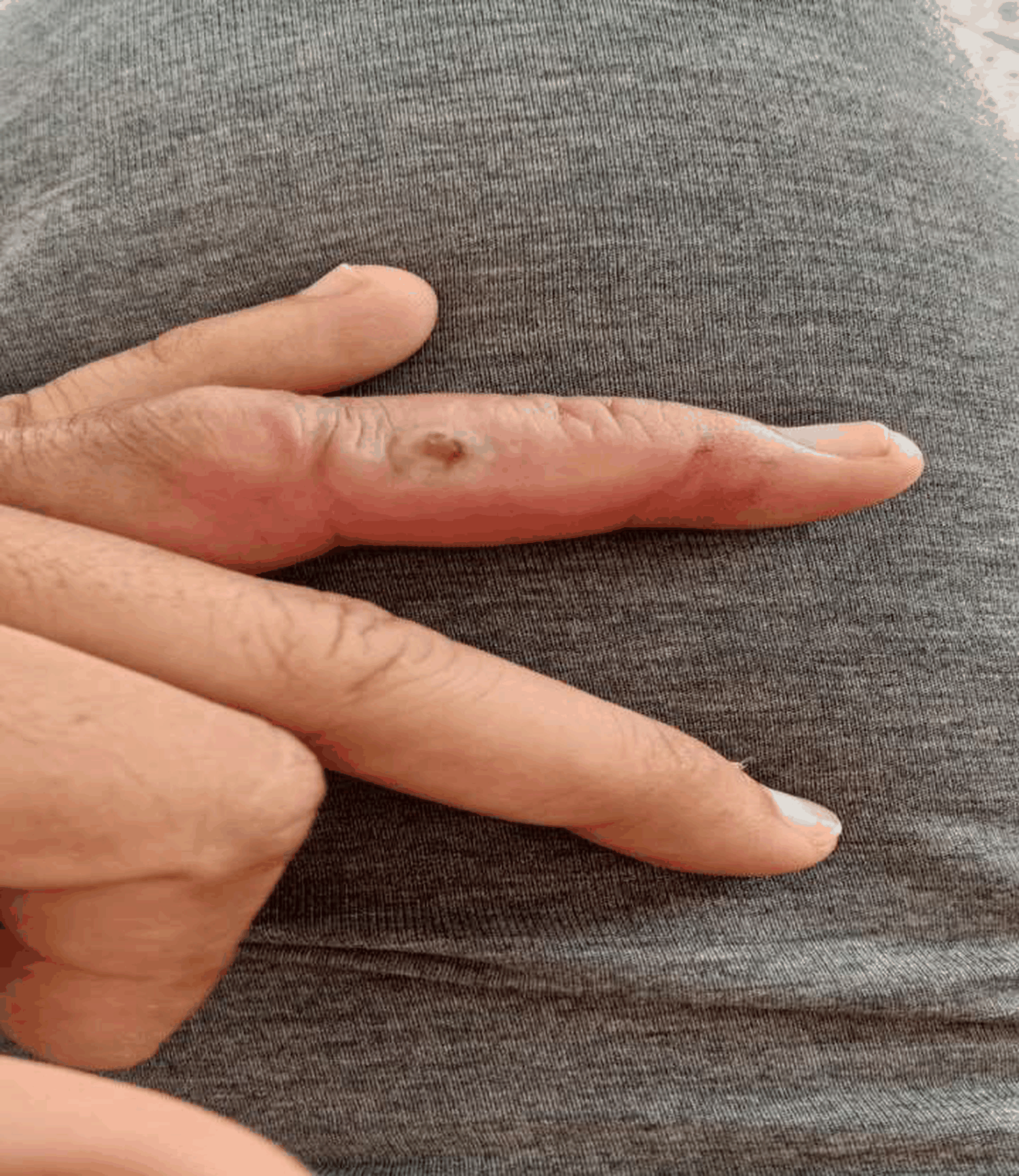
Figure 1A : Nodular lesion of contagious ecthyma.
Figure 1B: Nodular lesion of contagious ecthyma.
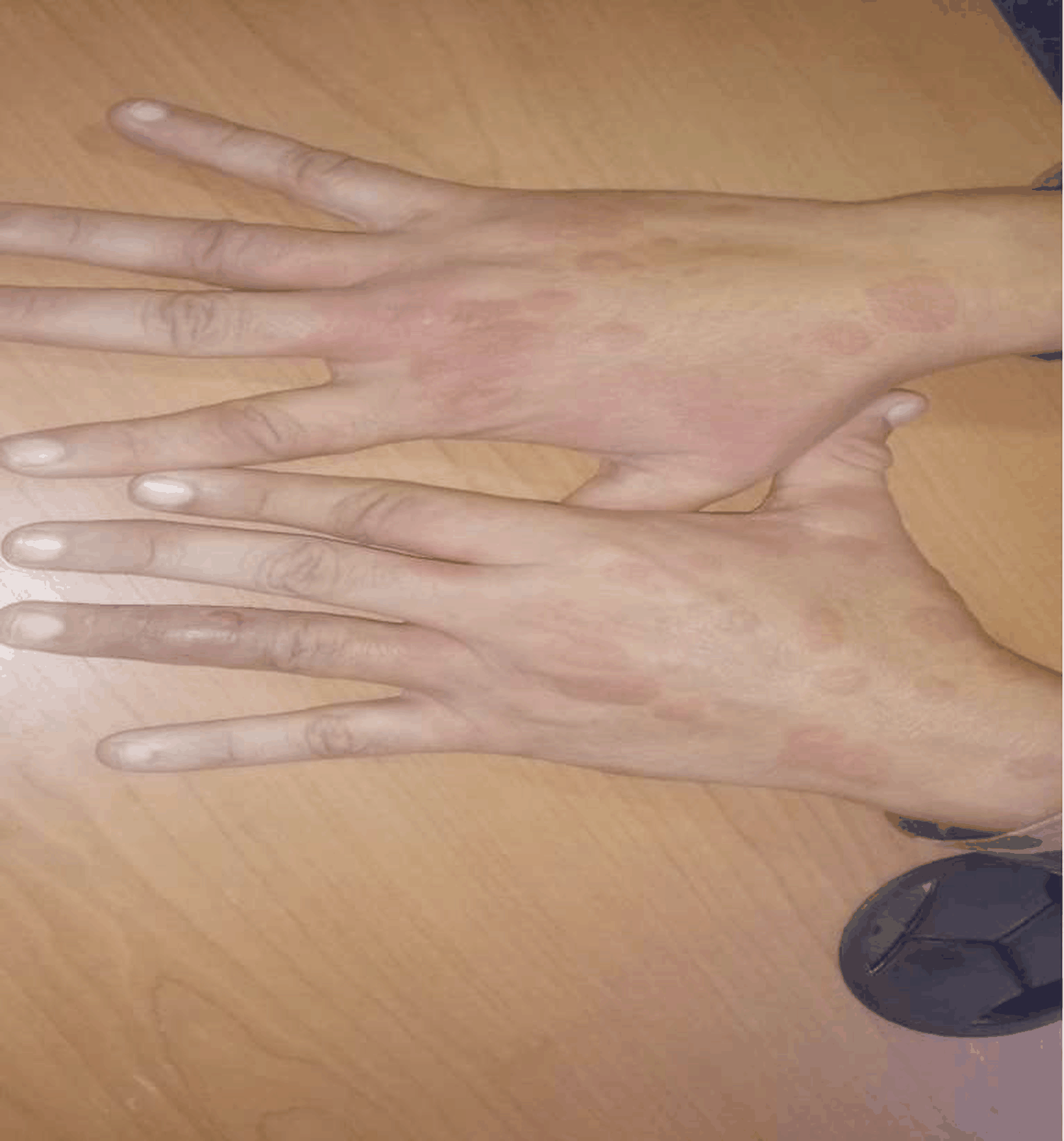
Figure 2A: Targetoid lesions of erythema multiforme.
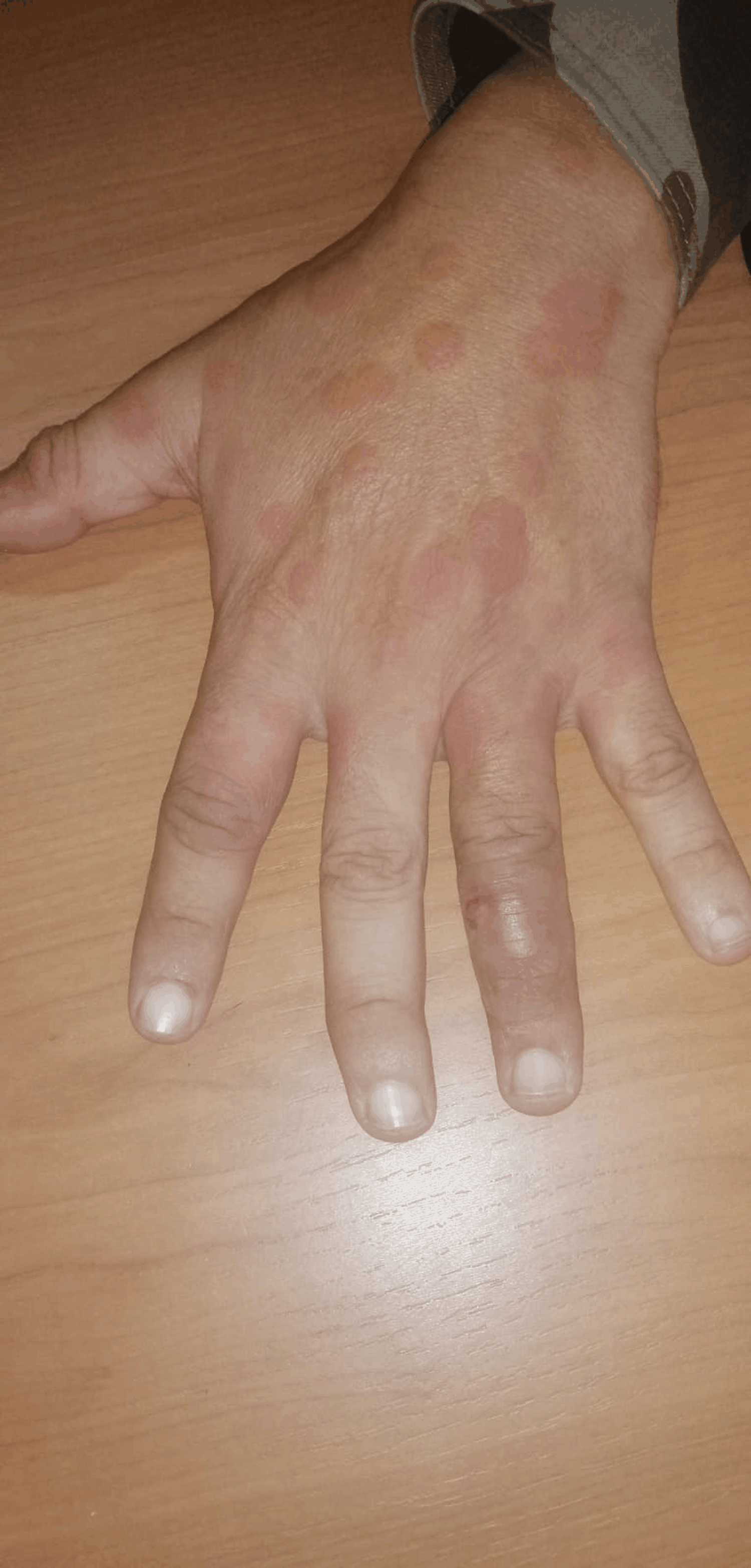
Figure 2B: Targetoid lesions of erythema multiforme.